Deciding On New Or Renovated Homes In Shore Acres
May 28, 2026
May 28, 2026
Buying in Shore Acres is not just about choosing the home that looks better in photos. In this part of St. Petersburg, the decision between new construction and a renovated home often comes down to flood exposure, insurance, permitting, and long-term ownership costs. If you are weighing both options, a clear framework can help you look past finishes and focus on what will matter after closing. Let’s dive in.
In Shore Acres, this is rarely a simple style decision. Pinellas County says everyone in the county is in a flood zone, and it also warns buyers not to confuse flood zones, evacuation zones, and storm-surge maps because they measure different risks.
That distinction matters when you compare homes on the same street or even within the same general area. A renovated home may feel more charming or more familiar in layout, while a new home may reflect current floodplain rules more closely. In Shore Acres, the smarter comparison starts with risk and compliance, then moves to design and price.
The neighborhood is also part of ongoing resiliency work. In 2024, St. Petersburg approved a state grant for the Shore Acres Resiliency Infrastructure Project, and Florida’s 2026-27 resilience plan still lists a Shore Acres Denver Street stormwater drainage project. That tells you Shore Acres remains an active focus for drainage and stormwater improvements.
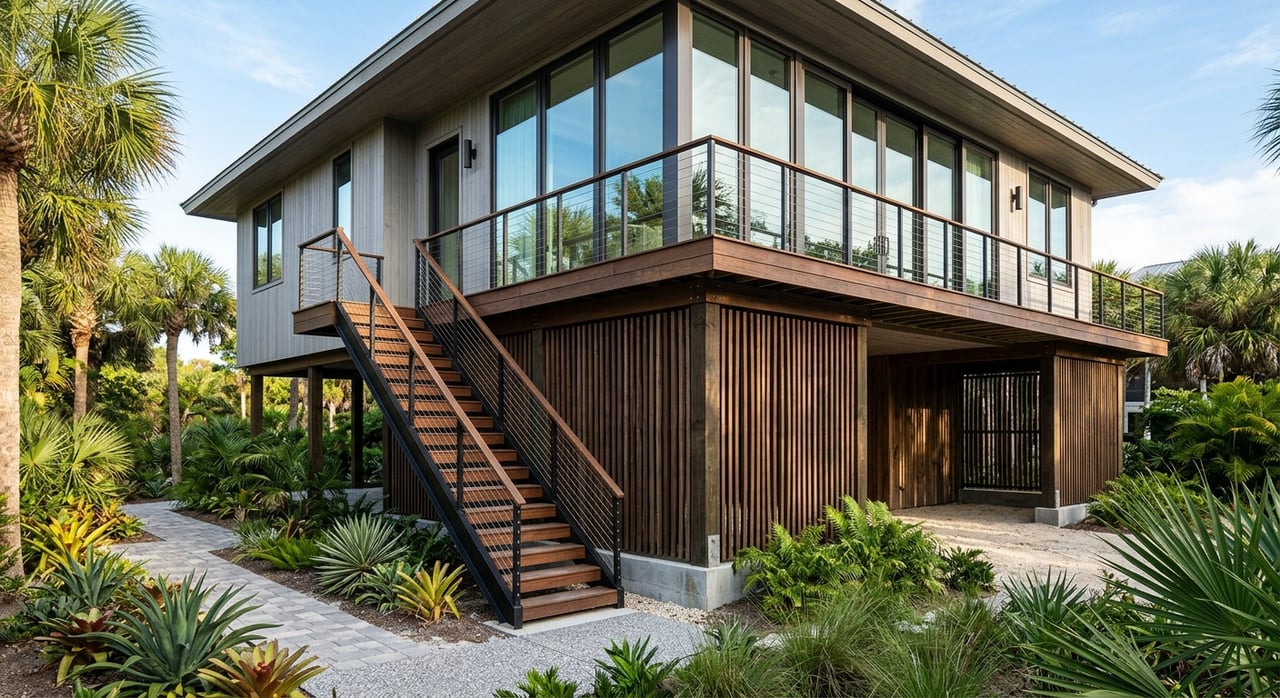
New construction is usually the more straightforward option if you want a home that fits current floodplain standards from the start. Pinellas County’s Build Smart guidance says new or substantially improved buildings should be built at least one foot above base flood elevation, and FEMA says new or substantially improved residential structures in NFIP communities must be elevated to or above base flood elevation.
In practical terms, that often means elevated foundations and a different first-floor setup than many older Shore Acres homes. You may see less traditional ground-level living space, but that tradeoff often supports better flood compliance and fewer immediate upgrades after purchase.
This matters because much of Shore Acres was built low. A city repetitive-loss analysis found that most structures in the study area were single-story slab-on-grade homes, with 60% of houses on a slab, and that these low-lying structures were more prone to flooding.
That report also says elevating a structure above the flood level is generally the best flood-protection measure short of removing the building from the floodplain. So when you tour a newer elevated home, you are often seeing a direct response to the neighborhood’s flood history, not just a modern design preference.
A new home does not eliminate flood risk, and it does not guarantee lower ownership costs. Still, in Shore Acres it often offers a cleaner starting point because the home was likely designed around current elevation and floodplain requirements.
For many buyers, that can mean fewer immediate questions about whether a prior remodel was properly permitted, whether major systems were raised, or whether future work could trigger additional compliance issues. If you value predictability, that can be a meaningful advantage.
A renovated home can still be a strong choice in Shore Acres. Many buyers are drawn to older lot character, a more traditional one-story layout, or a lower entry price than a brand-new elevated build.
That said, in this neighborhood the key issue is not whether a home has updated finishes. The real question is whether the renovation improved the home’s resilience, permitting profile, and long-term cost picture.
St. Petersburg requires permits for new buildings, additions, alterations, remodels, demolition, and regulated mechanical, electrical, gas, or plumbing work. That makes permit history one of the most important due diligence items when you are considering a renovated property.
A home can show beautifully and still leave important questions unanswered. If major work was done, you want to know what was permitted, when it was completed, and whether it addressed flood-related concerns in a meaningful way.
In Shore Acres, buyers should pay close attention to the substantial-improvement threshold. FEMA defines substantial improvement as work equal to or exceeding 50% of the structure’s market value before construction starts, and St. Petersburg materials describe the same concept as the 49% rule.
If a project crosses that line, it generally has to comply with flood-elevation requirements rather than staying a simple cosmetic remodel. That means the renovation story is not just about kitchens, baths, or flooring. It is also about whether the work changed the home’s compliance obligations.
This is where buyers need to be especially careful. The Shore Acres repetitive-loss report explains that residential dry floodproofing does not let a homeowner bypass the FEMA 49% rule or the city floodplain ordinance.
The same report says NFIP typically does not offer a lower insurance rate for dry floodproofed residences. In other words, a home can feel updated and still fall short where flood resilience and insurance costs are concerned.
Flood insurance is a separate policy, and Pinellas County says most homeowners and renters insurance does not cover flood damage. The county also notes that NFIP premiums are property-specific and can be affected by elevation, foundation type, replacement cost, date built, and building construction.
That is why the new-versus-renovated conversation should include insurance from the beginning, not after you are emotionally committed to a home. Two properties with similar list prices can carry very different long-term ownership costs once flood insurance is factored in.
Pinellas County also says an Elevation Certificate helps an agent properly rate the policy. If you are comparing homes, asking for that document early can give you a clearer view of the total cost of ownership.
If you are trying to choose between one new build and one renovated home in Shore Acres, a side-by-side review usually works best. Focus on the issues that will affect your daily use, long-term costs, and future flexibility.
Here are the most important checks:
St. Petersburg floodplain materials specifically recommend measures such as raising equipment and using sewer check valves. Those details may not be exciting, but they often matter more than cosmetic upgrades.
If your priority is a cleaner compliance profile and less near-term uncertainty, new construction may be the better fit. In Shore Acres, that often means the home was designed with current elevation rules in mind from day one.
You may give up some ground-level convenience or a more traditional layout. But in exchange, you may gain a home that better reflects current standards and requires fewer immediate investigations into prior work.
A renovated home can absolutely be the better buy if the numbers and documentation make sense. The strongest cases are usually properties with documented permit work, visible elevation-related improvements, updated systems above flood level, and pricing that still works once insurance and maintenance are considered.
That is especially true for buyers who value lot character or prefer an older Shore Acres footprint. The key is making sure the flood story is as solid as the finish level.
In a flood-sensitive neighborhood, long-term value is often tied to more than curb appeal. Homes that are elevated, well documented, and easier to insure may offer a stronger ownership position over time because local standards and premiums are tied to the property’s actual exposure.
That does not mean every renovated home is a compromise or every new home is automatically superior. It means the best purchase is usually the one with the clearest paper trail, the most practical resilience features, and the fewest costly surprises.
If you are comparing options in Shore Acres, the right guidance can help you look beyond marketing language and focus on what truly affects value. For a strategic, concierge-level approach to buying or selling in St. Petersburg waterfront neighborhoods, connect with Alexis Logan.
Stay up to date on the latest real estate trends.


Get assistance in determining current property value, crafting a competitive offer, writing and negotiating a contract, and much more. Contact Alexis today to discuss all your real estate needs!