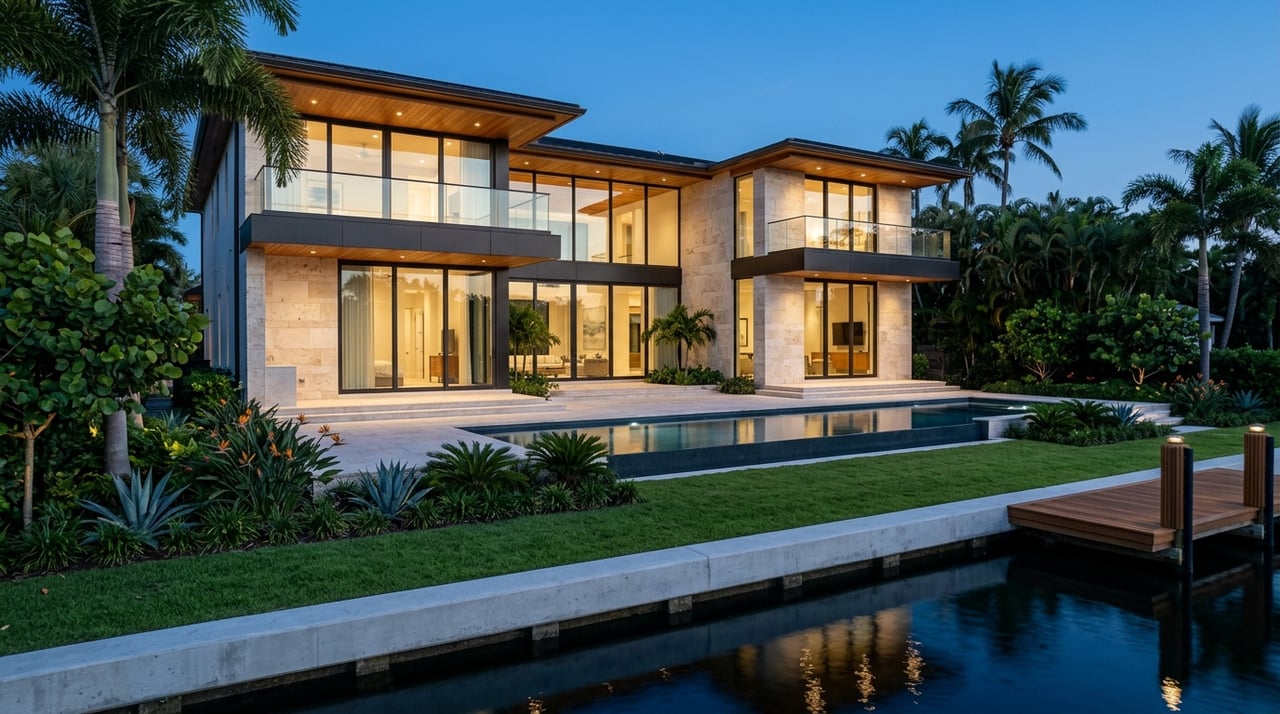
South Tampa vs. St. Pete Waterfront: Which Suits You?
June 25, 2026
June 25, 2026
Trying to choose between South Tampa and St. Pete waterfront living? At first glance, both offer bay views, boating access, and a polished coastal lifestyle, but the day-to-day experience can feel very different depending on which side of the bay you choose. If you want to compare lifestyle, housing style, commute patterns, and waterfront energy without getting lost in fast-changing inventory, this guide will help you narrow the fit. Let’s dive in.
The clearest difference is this: South Tampa feels more neighborhood-first, while St. Pete feels more district-first. Both offer luxury and waterfront opportunities, but the structure of daily life changes depending on where you land.
In South Tampa, the waterfront is spread across established residential areas and smaller mixed-use pockets along Tampa Bay. In St. Pete, the waterfront is more public-facing and concentrated around downtown districts, the pier, museums, and a denser arts-and-dining core.
If you are deciding between the two, the most useful questions are simple. Where do you expect to spend most of your time? How often will you cross the bay? And do you want your waterfront lifestyle to feel more residential or more walkable and active?
South Tampa appeals to buyers who want waterfront living close to Tampa’s business core and established neighborhoods. The overall feel is more residential, with a mix of bayfront streets, canal-front homes, parks, and a few more urban waterfront settings.
The City of Tampa describes Davis Islands as a mix of residential and retail areas surrounded by parks, green space, and water views. Ballast Point is noted for historic homes and renovations with easy access to downtown, while Bayshore Gardens offers a wider range of housing options.
That variety matters because South Tampa is not just one type of waterfront market. You can find more traditional single-family living in neighborhood settings, but you can also find higher-density waterfront living near downtown in areas like the Channel District and Harbour Island.
If you prefer a neighborhood setting, South Tampa gives you a broad spectrum rather than one uniform product type. Some areas lean toward older homes and renovated properties, while others offer a more urban condo experience near the water.
Davis Islands adds a unique wrinkle because it is technically an archipelago, with part of the island separated by a canal. Near downtown, the Channel District and Harbour Island bring in high-rises, waterfront eateries, and public boat docks, which creates a more city-oriented version of waterfront living.
South Tampa’s waterfront lifestyle often revolves around local parks, neighborhood routines, and quick access to Tampa destinations. Bayshore Boulevard is a major piece of that experience, with the Bayshore Linear Park Trail running from Columbus Statue Park to Gandy Boulevard and including a bike lane and marina access.
Instead of one concentrated waterfront district, South Tampa gives you several strong lifestyle nodes. Hyde Park Village adds shopping and dining, while downtown Tampa offers the Riverwalk, museums, public art, sports, and entertainment nearby.
St. Pete offers a broader and more layered waterfront experience, especially for buyers who want both residential options and a more activated public waterfront. On this side of the bay, the water is tied more closely to downtown culture, arts districts, parks, and a stronger walk-to-dining pattern.
The city’s tourism materials describe downtown St. Pete as a hub for arts, shopping, food, and drink. The St. Pete Pier adds a 26-acre waterfront destination with eateries, green space, water activities, and museum access.
That creates a different rhythm from South Tampa. In St. Pete, the waterfront can feel like part of your neighborhood and part of the city’s larger public life at the same time.
St. Pete’s waterfront stock spans historic neighborhoods, island communities, canal-front homes, and downtown waterfront living. That range can be especially appealing if you want more choice in home style and setting.
Historic Old Northeast is known for homes ranging from century-old properties to newer homes designed to reflect nearby historic character. Snell Isle dates to the 1930s, and its neighborhood association notes that more than 80% of residents enjoy waterfront views. Venetian Isles includes about 533 waterfront homes on man-made islands with deep-water canals designed for sailboat and powerboat access.
Downtown St. Pete adds another option for buyers who want a more urban waterfront lifestyle. If your ideal day includes stepping out to dining, galleries, parks, and the pier, the condo market near downtown may feel especially aligned.
St. Pete’s dining and cultural life are more concentrated around the downtown waterfront. Central Avenue begins at the waterfront and stretches west through boutiques, galleries, restaurants, and bars, while the downtown waterfront district and museum district add even more destinations in a compact area.
Public waterfront access is also a major part of the lifestyle here. North Shore Park, Vinoy Park, the downtown waterfront trail, and the pier create a waterfront edge that often feels more active and publicly used than South Tampa’s.
For many buyers, commute direction is one of the biggest decision points. If your daily life is centered in Tampa, South Tampa usually offers the more convenient setup.
Davis Islands is right outside downtown Tampa, Hyde Park sits immediately west of the downtown business and cultural core, and Ballast Point also offers easy downtown access. That makes South Tampa especially practical if you expect regular trips to downtown Tampa, Westshore, or other parts of the Tampa peninsula.
St. Pete is still well connected, but a Tampa-based routine typically means bridge travel. In 2025, FDOT announced that the Howard Frankland Bridge replacement opened to traffic and increased capacity by 50%, which improved regional roadway capacity, but a cross-bay commute is still a bridge commute.
Within St. Pete itself, local mobility is a strong point. The city is described as easy to navigate because of its grid system, and local transportation options include bike lanes and the SunRunner, which connects downtown St. Pete with South Pasadena and St. Pete Beach.
This may be the most important lifestyle distinction of all. South Tampa tends to feel more residential at the water’s edge, while St. Pete often feels more publicly activated and culturally connected.
In South Tampa, signature waterfront experiences include Bayshore Boulevard and parks such as Ballast Point. The setting often feels tied to home, neighborhood routines, and smaller lifestyle hubs.
In St. Pete, the waterfront includes North Shore Park, Vinoy Park, the pier, and the downtown trail system. That adds more visible public activity, more walkable destinations, and stronger connections to dining, museums, and city events.
Neither approach is better across the board. It simply depends on whether you want your waterfront home to feel like a quieter residential base or part of a larger urban waterfront scene.
South Tampa may be the stronger fit if you want:
This side of the bay often works well for buyers whose schedule, business, or social life is primarily Tampa-centered.
St. Pete may be the stronger fit if you want:
This side of the bay often appeals to buyers who want the waterfront to be part of both home life and a vibrant city lifestyle.
If you are torn between South Tampa and St. Pete, focus on four practical filters. They tend to bring clarity faster than broad lifestyle labels alone.
Think about where your week actually happens. If most of your work, meetings, schools, or regular appointments are in Tampa, South Tampa may feel more efficient.
If your routine is centered in St. Pete, central Pinellas, or a more walkable downtown environment, St. Pete may offer a better daily flow.
Even with improved regional capacity, cross-bay travel is still part of the equation when you choose one side and work on the other. Some buyers are comfortable with that tradeoff. Others quickly realize they want to stay closer to their everyday destinations.
If you are drawn to established South Tampa neighborhoods with a range of traditional homes and some condo options near downtown, South Tampa may be a natural fit. If you want a broader spread of historic areas, island communities, deep-water canal neighborhoods, and downtown waterfront living, St. Pete may offer more variety.
Ask yourself what you want to see when you step outside. Do you picture a residential street, neighborhood park, and nearby trail? Or do you want a waterfront lined with parks, museums, restaurants, and public gathering spaces?
That simple question often reveals whether South Tampa or St. Pete feels more like home.
If you are weighing luxury or waterfront options in St. Petersburg or across the Tampa Bay area, working with an advisor who understands neighborhood fit, contract strategy, and the nuances of waterfront property can make the process much more efficient. To start the conversation, connect with Alexis Logan.
Stay up to date on the latest real estate trends.
Get assistance in determining current property value, crafting a competitive offer, writing and negotiating a contract, and much more. Contact Alexis today to discuss all your real estate needs!