Buying A Boater Friendly Home In Venetian Isles
May 14, 2026
May 14, 2026
If you picture your next home with a boat behind it, Venetian Isles deserves a closer look. This waterfront St. Petersburg neighborhood was designed around canals, bridges, and direct boating access, but not every property fits every vessel or every boating routine. If you want a home that works as well on the water as it does on land, knowing what to review before you buy can save time, money, and frustration. Let’s dive in.
Venetian Isles is a deed-restricted waterfront community in St. Petersburg on Tampa Bay, positioned between Snell Isle and Shore Acres. According to the Venetian Isles Homeowners Association, the neighborhood includes roughly 533 waterfront homes on man-made islands connected by bridges, with deep-water canals designed for sailboat and power boat access.
That layout gives the community a very different feel from neighborhoods where only a small share of homes have usable water access. In Venetian Isles, the lot, canal position, dock setup, and approach to open water all play a practical role in how you will use the property day to day.
A boater-friendly home is not just any waterfront home. The right fit depends on your boat’s size, draft, air draft, and how you prefer to get out on the water.
Before you fall in love with a property, compare the home’s canal conditions to your actual vessel. That includes depth, width, visibility, and turning room at normal tides, along with whether your boat can comfortably clear the route from dock to open water.
A canal may look generous in listing photos, but appearance alone is not enough. The Florida Fish and Wildlife Conservation Commission identifies waterway depth, visibility, width, and related characteristics as central factors in boating-protection rules, and those same factors are useful when evaluating whether a specific home will work for your boating needs.
If you own a sailboat or a larger power boat, this step matters even more. A home can be waterfront and still be inconvenient if the canal geometry makes docking, backing out, or turning around more difficult than expected.
Venetian Isles is described by the HOA as having deep-water canals for sailboat and power boat access, and neighborhood guides note direct access to Tampa Bay. Even so, buyers should ask how the property’s location affects the run from the dock to open water.
Some buyers want quick, easy access for frequent outings. Others may care more about protected dockage and are comfortable with a slightly longer route. The key is to match the property to the way you actually boat, not just the idea of owning a waterfront home.
Your route out matters beyond convenience. You should also review posted markers, local slow-speed areas, and manatee protection zones that may affect how you navigate from the property.
In Florida, the FWC is responsible for marking boating restricted areas and manatee protection zones, while red and green channel markers are managed by the U.S. Coast Guard. For buyers, that means a smart home search includes understanding the boating rules along the route, not just the dock behind the house.
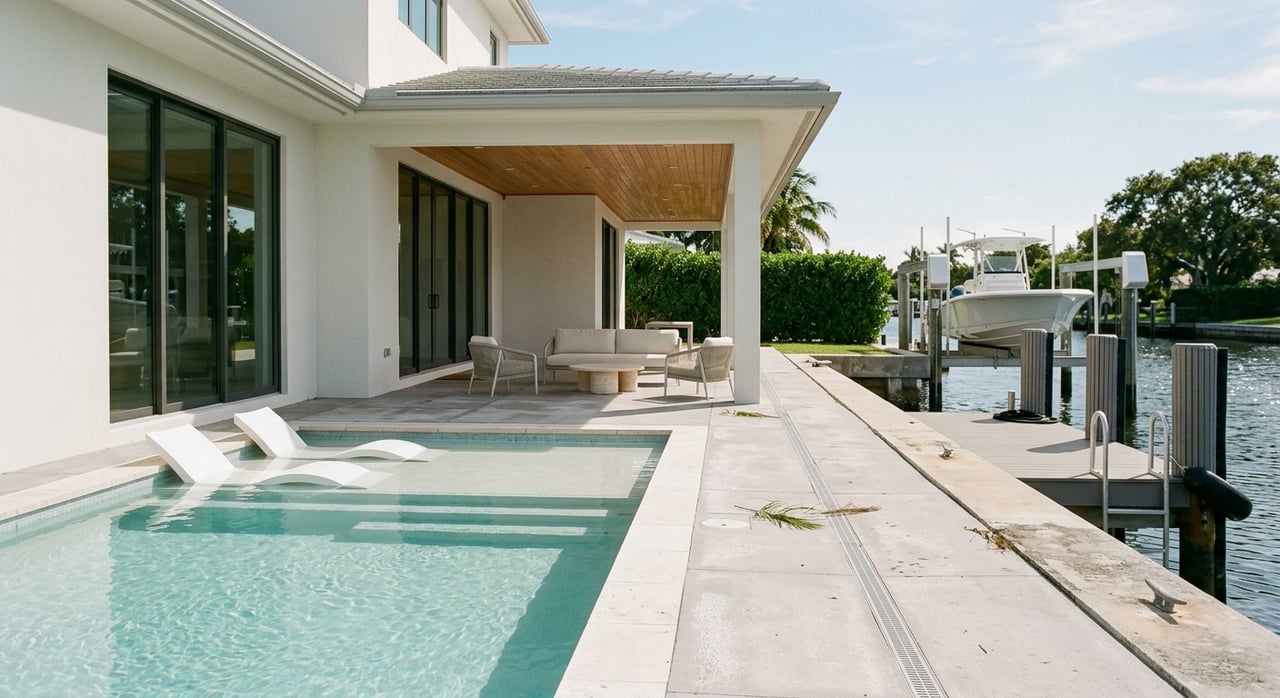
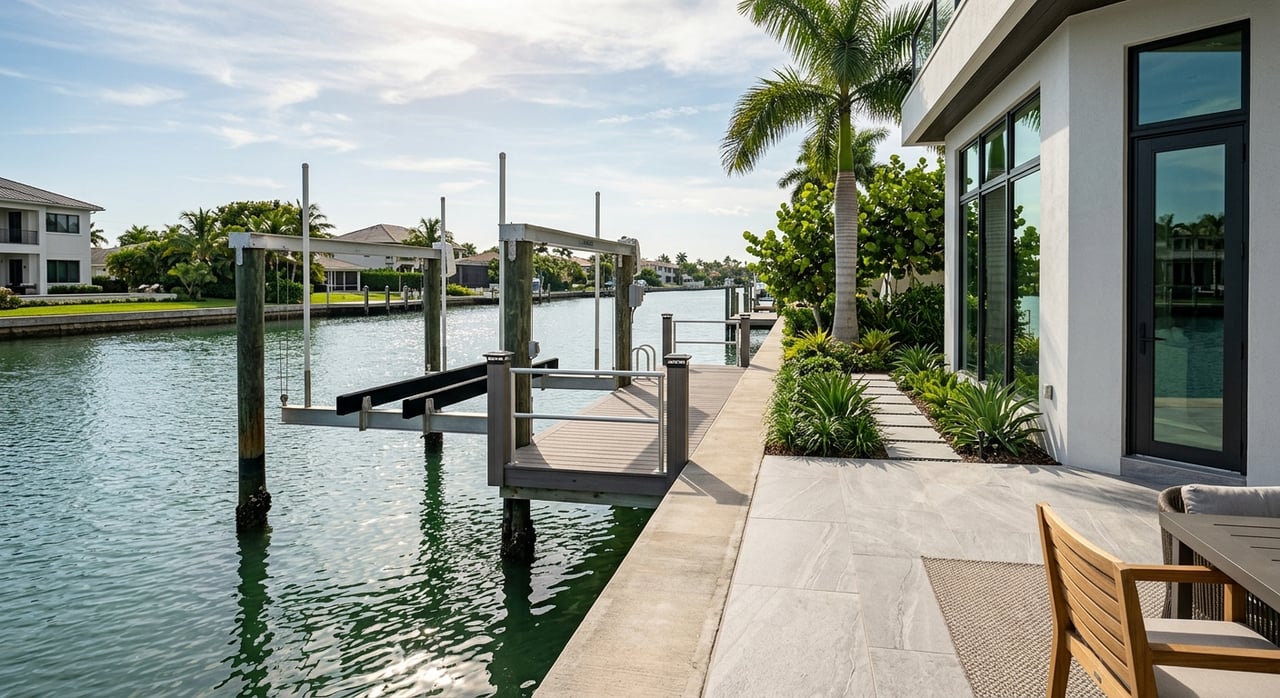
In a waterfront purchase, the home itself is only part of the asset. The dock, lift, and seawall can have a major impact on usability, maintenance, and future cost.
Pinellas County requires Water and Navigation permits for private docks, marinas, seawalls, riprap, tie poles, and all dredging or filling within county waters, including projects in cities as well as unincorporated areas. The county reviews these projects for environmental and navigational impacts, which makes permit history an important part of buyer due diligence.
A dock or lift may appear functional during a showing, but buyers should still confirm whether it was properly permitted. The same goes for seawall work, dredging, or fill activity that may have happened over time.
This is especially important if you plan to modify the waterfront improvements after closing. A feature that exists today may still require county review if you want to change, expand, or replace it later.
Use a simple checklist as you review a Venetian Isles property:
These questions can help you understand whether the property is truly ready for your boating lifestyle or whether future improvements may involve additional time and expense.
Venetian Isles adds another layer beyond city or county review. The HOA states that all homeowners must comply with the deed restrictions regardless of membership, and its Architectural Review Committee requires approval for exterior construction projects, including new construction, renovation, and certain repairs.
That matters because HOA requirements can be more restrictive than City of St. Petersburg codes. In practical terms, a city permit does not automatically mean a project satisfies HOA rules.
If you are considering changes to a dock, seawall, exterior elevation, or other visible improvements, it is wise to review HOA requirements early. That is true whether you are buying an older home to update or a property that already appears turnkey.
For waterfront buyers, this step is about protecting both lifestyle and timeline. It helps you avoid assumptions about what can be changed after closing.
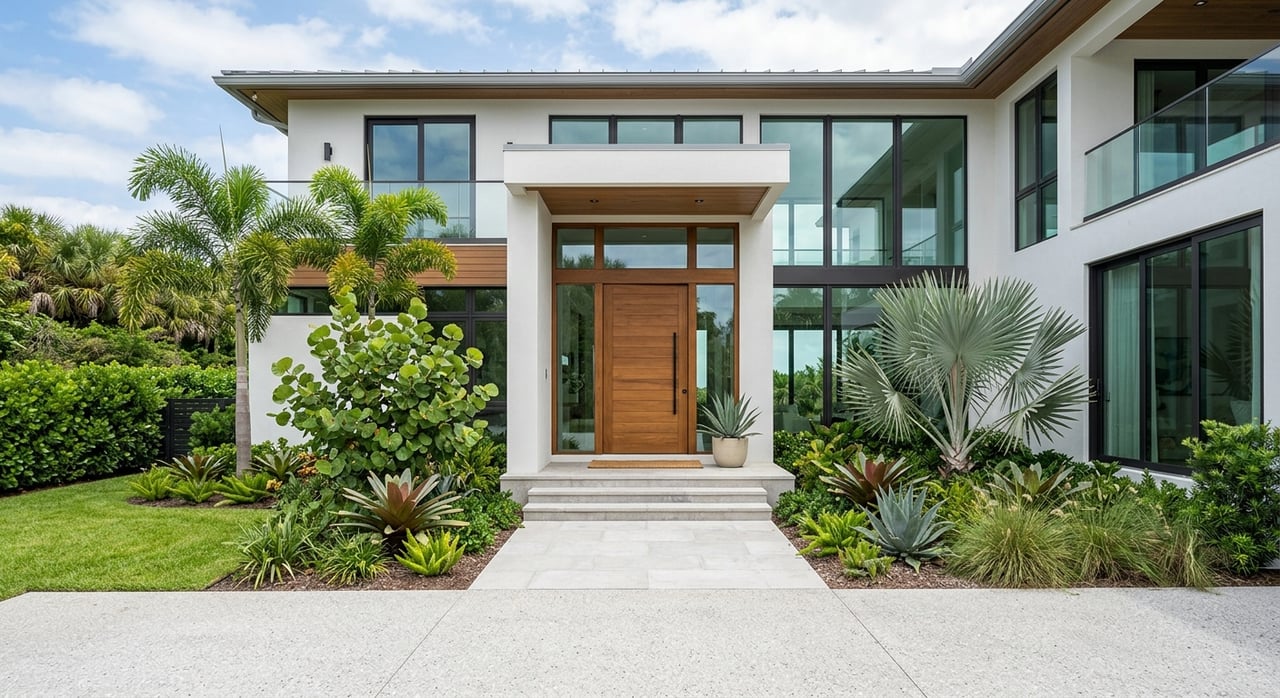
Neighborhood guides describe Venetian Isles homes as a mix of ranch-style houses, Spanish- and Mediterranean-inspired homes, and modern builds. That variety reflects the community’s original development period in the late 1960s and early 1970s, along with later renovations and rebuilds.
For you as a buyer, the home style often hints at the condition profile. Some homes may retain much of their original structure, while others may have updated interiors but older waterfront infrastructure, and newer custom homes may offer a very different ownership experience.
It is easy to focus on kitchens, baths, and water views. In Venetian Isles, you should also look closely at the age and condition of the dock, seawall, lift, drainage, and any history of storm-related repairs.
On a boater-friendly property, these features are not secondary. They are part of how the home performs and how much upkeep it may require over time.
Flood review should be part of your first round of due diligence, not a last-minute task. The Venetian Isles HOA says the neighborhood was built as a submerged water landfill project at about 5 to 7 feet above the natural shoreline, which makes elevation and flood mapping especially relevant for buyers.
The practical takeaway is simple: do not assume all waterfront homes in the neighborhood carry the same flood profile. You should verify the property’s mapped flood risk through FEMA’s official flood map source and factor that information into your decision-making early.
When you check flood risk at the start of the process, you can make more informed comparisons between homes. It also gives you time to think through ownership costs and how a specific property fits your comfort level.
For luxury and waterfront buyers, this kind of early review supports a more confident purchase strategy. It helps you evaluate the full picture rather than reacting to surprises later in the transaction.
If you are serious about buying a boater-friendly home in Venetian Isles, keep your review focused on the features that affect real-world use.
Here are the core items to verify:
A beautiful waterfront home can be the wrong boating fit if these details are overlooked. The best purchase is one that supports both your lifestyle and your long-term ownership goals.
For buyers considering Venetian Isles, this is where local waterfront knowledge becomes especially valuable. In a neighborhood shaped by canals, bridges, permits, deed restrictions, and differing home conditions, careful review can help you choose with clarity.
If you are planning a move to Venetian Isles or comparing waterfront options in St. Petersburg, working with an agent who understands boating access, flood context, and the details behind complex waterfront transactions can make the process far more strategic. To explore homes with informed, concierge-level guidance, connect with Alexis Logan.
Stay up to date on the latest real estate trends.
Get assistance in determining current property value, crafting a competitive offer, writing and negotiating a contract, and much more. Contact Alexis today to discuss all your real estate needs!